The evacuation officer had brought thirty wristbands for a shelter containing thirty-six people.
"The other six aren't on the register," he told Alma.
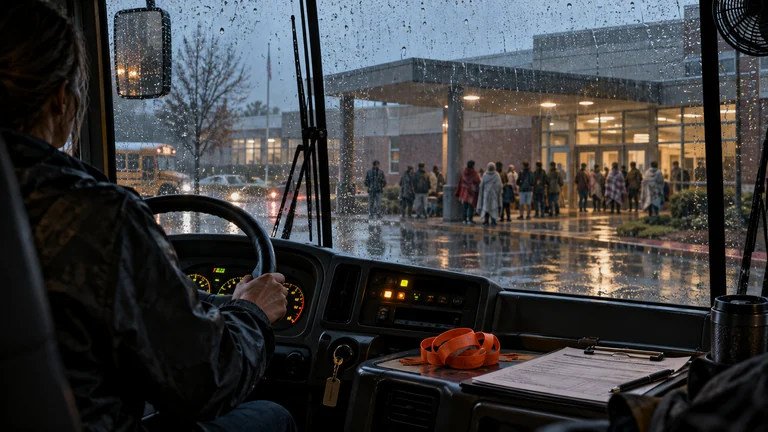
Alma looked past him at her bus. Forty-two passenger seats, all dry. Rain ran from the brim of the officer's cap onto his clipboard.
"There's room."
"That's not the issue."
He began calling names. People came out of the school gym with blankets over their heads. The wristbands were orange, the same color as the sponsor's logo on the bus. Alma had driven it for eleven years, before the company painted HELPING OUR NEIGHBORS down its side.
The river gauge on her dashboard showed red. At the depot, the dispatcher's last instruction had been to cross the eastern bridge by ten. The water authority was opening the spillway after that. Nobody could promise the bridge would remain passable.
It was nine thirty-eight.
Alma counted people as they boarded. She always did. A manifest could be wrong in either direction.
Thirty came through the door.
The officer closed his folder.
Six people remained beneath the school's entrance canopy: four men, a woman and a teenage boy wearing a restaurant apron over his clothes. Alma knew the apron. The restaurant was next to the depot. The boy sometimes brought bread to the drivers after closing.
"They'll be collected separately," the officer said.
"By whom?"
"Immigration transport."
"When?"
He checked his watch without answering.
Alma called dispatch on the bus radio. The officer stayed by her open door while she asked for the second vehicle's arrival time.
There was a long pause.
"We have no other vehicle assigned to that location."
"You heard," Alma told him.
"Different service."
She asked him to call that service.
He stepped away, spoke into his phone and returned with the phone still in his hand.
"The request is logged. We need to move."
Behind him, the boy had picked up the woman's bag. She was using both hands to hold a blanket around one of the older men. Water was running down the school steps now.
Alma opened the luggage compartment. She pointed to it and called to the six people.
"Bags in here. Then get aboard."
The officer moved between them and the bus.
"You can't admit unprocessed passengers."
"Then process them."
He came up the steps, leaned past Alma and turned off the ignition. Before she could catch his wrist, he'd pulled the key free.
The engine stopped. The air inside the bus grew quieter, then full of the small sounds people make when they realize safety has been interrupted.
The officer turned to speak to them. He held the key above shoulder height.
"Your driver is delaying your departure."
Alma rose. For a moment she couldn't think past his fingers and the little plastic tag on her key. She'd labeled it herself because the depot's spare looked almost identical.
He was between her and thirty people who wanted to get across the bridge.
"Tell them what time the spillway opens," she said.
He turned toward her. The boy outside took the woman's bag from the compartment and began walking back toward the school.
Alma reached across the dashboard and closed the passenger door with the officer inside.
"Open it."
"Give me the key."
He tried the door controls. She covered them with her arm.
"This is unlawful detention."
"You're leaving when we leave. All thirty-six."
A man in the second row stood. Alma thought he would pull her away. Instead he said, "My wife's in here. Give her the key."
Other passengers began speaking. The officer backed against the windscreen, his hand still raised.
Alma called through her window to the boy. This time he waited.
At nine forty-six the officer put the key on the dashboard.
They loaded the six passengers. Alma counted thirty-six, plus the officer, before she pulled away.
The road to the bridge was already under a thin sheet of water. She drove slowly enough to keep the tires on the raised center. Nobody spoke until the tires reached the dry metal deck.
Beyond the bridge, the officer ordered her to take the road to the processing compound. Alma followed the evacuation arrows to the public reception center. It was where every registered passenger had been promised a bed.
Outside the center, a camera crew was filming the mayor beside stacks of donated blankets.
The officer saw the cameras and reached for Alma's shoulder.
She sounded the horn until the crew turned.
Then she opened the doors.
The passengers came down in their blankets. The boy helped the older man. Alma handed the reporter her route sheet and asked him to look at the number of seats, then the number of wristbands.
The officer called the police.
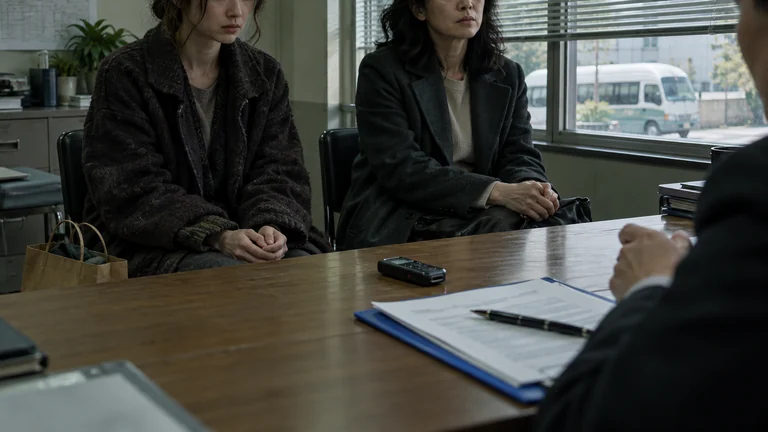
They arrived while the shelter staff were finding beds for everyone. A constable listened to him, then asked Alma to step away from the bus. She explained about the key and the spillway. He said she could explain again at the station.
The boy came running with a blanket for her. She couldn't take it with her hands behind her back, so he placed it over her shoulders.
Across the forecourt, the mayor stood beside her bus. The reporter was asking where the second transport had been.
Alma heard the mayor say that nobody had been left behind.
The constable guided her into the car. Through its window she watched the mayor turn toward the camera, standing directly beneath the word NEIGHBORS.