The ninth crop grew under the steps, where Edda had poured the water from her seed trays. Nobody had planted it. The leaves spread flat against the warm stone, keeping out of the wind that came down the terraces after sunset.
She nearly pulled it up.
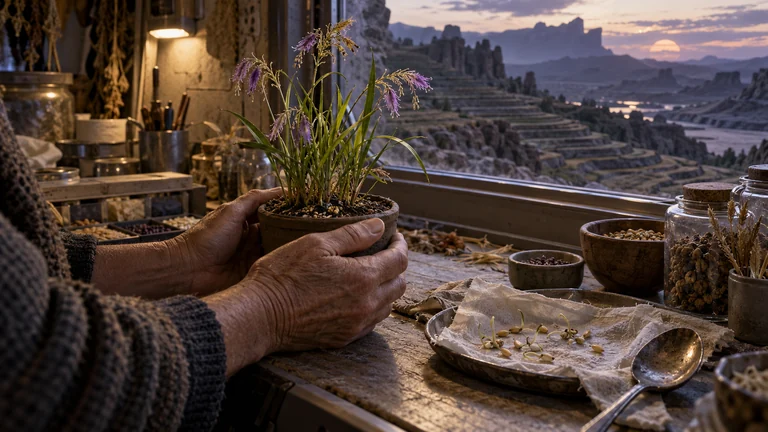
Instead she fetched a spoon from the kitchen and lifted the whole root, taking some of the settlement's expensive soil with it. She carried it indoors cupped in both hands, with the spoon sticking up like a marker over a grave.
Every eighth harvest they bought the activator. Without it, the descendants of the settlement grain made seeds that looked sound but would not open. The restriction was part of the original crop design. A plant that could not escape its planting cycle could not become an invasive species, the arrival literature explained. Edda still had the booklet. The grain had been here for seventy years. The revised activator price arrived from Earth every spring, even in years they needed none.
She grew the volunteer in her pantry. It flowered early, with the narrow purple fringe of the ornamental hedge outside. She used a brush to move its pollen, numbered its seed heads and waited.
The resulting seed opened in plain water.
Edda sat at the kitchen table until the light went off automatically. She had selected the village's planting stock for twenty-six years, discarding diseased heads and arguing with people who wanted to eat the best grain rather than keep it. A few seeds on wet cloth had made all that work feel suddenly provisional.
She ran the test again. She grew another generation in a heated cabinet, then a third. The plants varied, but their seed remained fertile. She checked the terraces for more volunteers and found none. The hedge had been planted from a school experiment; it had flowered only once, before the cold killed it.
Across the lane, Hal was repairing his harvester with the hood held up by a rake. He owed half the next crop against the activator shipment. He asked whether she had found any way to make the old supply go further.
"I'm trying something."
"You always are."
He said it kindly. That made her go home by the upper path.
Edda's house belonged to the cultivation trust. So did the square of ground where she had buried two dogs and planted the trees that would never be tall enough to shelter the roof. Her lease was renewed each year with her appointment as seed selector. The stairs had become difficult lately. If she stopped doing the work, she would have ninety days to leave.
She sent a sample to a breeding laboratory. She described it as an unexpected fertility mutation and paid for the assay herself.
Their first reply asked for another sample.
The second asked whether anybody else possessed viable material.
Edda read that question in the pantry, among the little plants.
The laboratory could not patent the original mutation where she lived. It could buy exclusive access to her tested line, develop a registered commercial strain and protect the treatment that kept its future generations controlled. The offer did not pretend otherwise. Its plainness was almost restful.
There was enough money to buy the house.
There was also an undertaking to surrender her retained stock and certify its destruction. The breeder could not stop another mutation occurring somewhere. It could ensure this particular one did not leave her pantry in a neighbor's pocket.
Edda went to the trust office and asked the purchase price. The clerk took her question as an indication that she expected to retire. Before she left, he asked whether he should advertise for a new selector.
"Not yet," she said.
Hal came that evening with a bowl of soup and a broken seed gauge. He stood in the pantry doorway while she fetched a replacement from the shelf.
"Are those the ones?"
She looked at the plants.
"They don't breed reliably."
He nodded. He had trusted her judgments about seed longer than he had trusted his own eyes. When she gave him the gauge, he thanked her for trying.
The breeder took six sealed packets. Edda signed the transfer, received the payment and bought the house before the next lease meeting. Nobody asked where the money came from. She had always been careful; people imagined careful people accumulated money somewhere.
For the harvest gathering she made the toasted-grain dish her mother used to bring. She put the remaining seed in the oven herself and kept it there well beyond the usual time. The heads crackled as their moisture escaped. She ground some into flour and left some whole so there would be something to bite.
The plants went into the hot composter. She cleaned the cabinet and checked the floor beneath it. Then she checked the pocket of the apron she had worn while harvesting.
Hal carried the dish to the long table. He apologized that he could not contribute more than bread this year.
Edda watched the bowl pass from hand to hand. Someone asked what made it taste different. She said the oven had been too hot.
When the talk turned to the next activator order, they asked whether she would negotiate for them again.
"Of course."
Hal pushed the bowl back toward her. A few grains remained in the corners. She scraped them together with her spoon and ate them while he described the terms he hoped she could get.