After the flood, Owen had shaken hands with a man he'd watched drown.
The man was delivering bread to the control station. He knew there'd been a restoration because the company had told him. He didn't remember the water or the roof collapsing beneath his feet. Owen remembered everything.
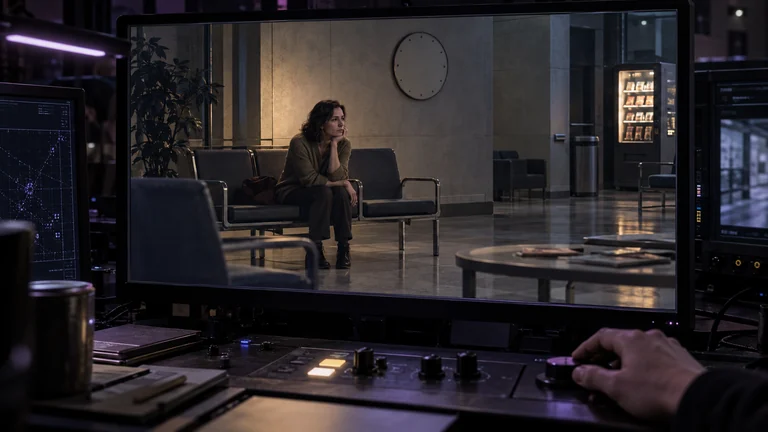
The station stood beyond the restoration boundary. Within that boundary, bodies and streets returned to their condition exactly twenty-four hours earlier. Memories went with them. Outside, the operators finished their shifts and went home carrying a day nobody else had lived.
Owen was on the second morning of a forty-eight-hour shift when his brother called from the square. The count had lasted all night.
"We won."
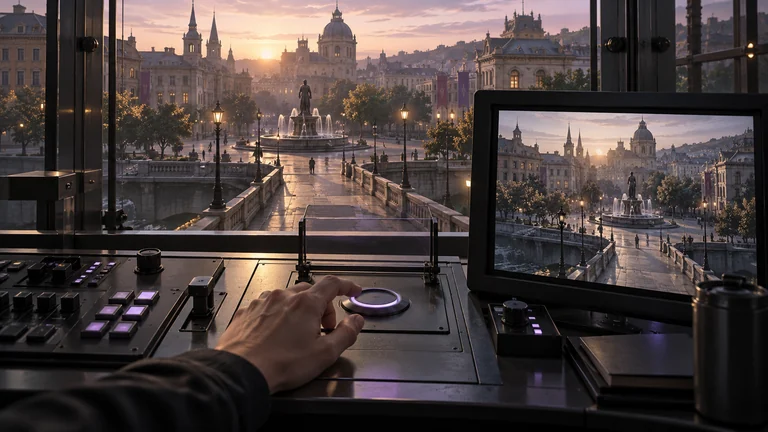
Cal held his phone high. Behind him, people were climbing the fountain. Someone had put a coat around the shoulders of the bronze founder.
"How much?"
"Enough."
"Cal."
"Sixty-three percent."
For the first time in the city's history, its residents had voted to end the company's governing concession.
Cal had spent his evenings knocking on doors. Owen had spent those evenings warning him to be careful.
"Look," Cal said.
He turned the phone toward the old administration building. A woman was coming down its steps with the certified count in a transparent folder. People moved aside to let her through. Then came a noise Owen mistook for a microphone breaking.
The phone fell.
For several seconds he saw shoes. Someone lay down beside them. The picture turned sideways, and Cal's face appeared at the edge of the screen.
Owen said his name.
Cal's mouth moved once.
The phone kept sending.
Owen found the square on the station cameras. Company security vehicles blocked the western street. Officers were firing from behind them. The woman with the folder lay halfway down the steps.
He called the control supervisor and the emergency line. When Cal's connection failed, he called his brother again.
At six eleven, two company representatives entered the station. They had watched from outside the boundary, in the administrative offices across the causeway.
"We need a restoration," the older one said.
Owen pointed at the screen.
"Your people did that."
"And we can undo it."
The system required two authorizations: the concession holder's and the duty technician's. After the flood, Owen had signed without taking off his wet coat.
Now the representative laid a tablet beside his hand.
"Every minute changes where they return to."
Twenty-four hours earlier, Cal had been at home. Owen had called him before the polls opened. Cal had been burning toast. He could put him back in that kitchen.
"What happens to the vote?"
"There won't be a vote today."
The representative opened a second document.
Polling suspended. Organizers detained pending investigation. The names filled several screens.
Owen saw people he knew. The woman downstairs who fixed bicycles. Cal's friend Tomas, who'd lent them a van when their mother moved.
Beside Cal's name was a blank box.
The representative touched it.
EXEMPTED.
"Provided he stays home."
Owen looked at the younger representative. She was staring at the floor.
"You remember," he said. "All of you out here remember."
Neither answered.
On the live picture, someone crawled toward Cal. They touched his neck, stayed a moment, then moved on to someone else.
If Owen refused, the ballots would remain. So would the dead in the square and the witnesses who'd seen who killed them. The company's term would be over, whatever it tried next.
Cal would remain where he was.
Owen opened his brother's contact picture. It showed Cal pretending to bite a fish he'd caught, the fish hanging well out of reach. He had taken that photograph.
The representative placed the authorization pad in front of him.
Owen entered his code.
On the cameras, the square emptied.
The fountain flowed into an unbroken basin. Yesterday's dawn touched the administration steps. A street cleaner worked around the base of the statue, pushing a little drift of leaves.
Owen called Cal.
"What?" his brother said. "I've got toast on."
Owen muted his microphone and bent over the desk. The representatives waited while he made a sound he couldn't have made with his brother listening.
"Stay there," he said at last. "I'm coming home."
He drove across the causeway with his station badge hanging from the mirror. Security trucks were already passing him.
At the apartment, Cal opened the door in yesterday's shirt.
Owen caught him by both shoulders.
"What's wrong?"
He pulled his brother close. Cal smelled of toast and the cheap soap they both bought. Owen pressed his face against his neck until Cal began to laugh uncomfortably.
"You're scaring me."
"Don't go out today."
"It's the vote."
"They've canceled it."
Cal stepped back.
From the courtyard came a shout.
Tomas was between two officers, barefoot, trying to twist toward the stairwell. His bicycle lay on its side beside the bins.
"Cal!"
Cal reached for the door.
Owen caught his arm.
"They'll kill you."
"They're taking Tomas."
"I know."
Cal tried to pull free. Owen held him harder, feeling the pulse in his wrist. Less than an hour ago, someone in the square had searched for that pulse and moved on.
In the courtyard, Tomas called again.
Owen pushed his brother back into the apartment and closed the door.
Cal stood against him, struggling for the handle.
"Let me out."
Owen turned the key.
On the other side, boots came up the stairs. They paused at their door, then passed it.
He kept his hand over the lock while his brother called him by name.