Inga kept her numbered ticket after the board went dark. She had waited two hours for forty-seven, and the fact that the office was closing did not make forty-six become the last person entitled to an answer.
The man who came out ahead of her was carrying her sewing machine.
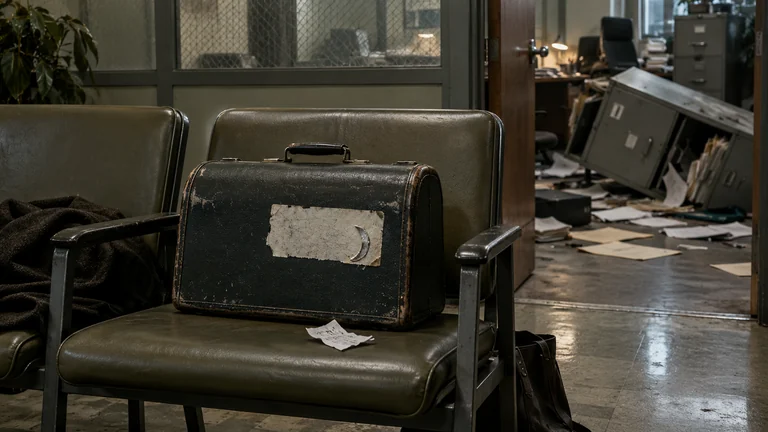
She knew the case by the white patch where a sticker had peeled away. Her sister had put the sticker there when they were girls: a little silver moon that shed its shine on everything it touched.
"That's mine," Inga said.
"I paid for it."
He shifted the weight against his hip. Behind him, the inner office door stood open. A chair lay on its side.
"They took it as security. I paid what they asked."
The man looked at her numbered ticket. Then he put the machine down and said that if she wanted it, she could help him with something else.
His name was Colm. He dealt in used appliances and had come for a private clearance sale. The collector was relocating, he told her. There would be a new address on the website, probably, once things settled.
Inga went into the office. She had rehearsed the conversation all the way there: dates, amounts, the promise that the machine would be returned after the final payment. She had brought every receipt in a plastic sleeve. None of it was useful in the room she entered.
The collector lay beneath a filing cabinet.
One leg protruded into the space beside his desk. His hand moved when she came closer. He had been trying to pull himself free by gripping the chair, which explained why it had fallen.
"Get this off me," he said.
Colm stood behind her.
"It went over when he tried to move it."
There was a fresh mark on Colm's cheek. Inga looked at it, then at the open drawers. She could imagine several ways the cabinet had fallen. The collector reached toward her shoe.
"Phone. On the desk."
She could see it. The receiver was ordinary beige plastic, the same one from which he had called her employer to ask whether she was reliable. After that call her employer stopped leaving cash in the room where Inga worked.
"I'm taking my machine," she said.
"Fine. Take it. Call someone."
Colm offered to carry the case downstairs. She refused. She wanted to hold it herself from this room to the place where she lived. She had not made the last payment by letting other people carry things she needed.
Her car was in the pay-and-display yard behind the building. She put the case on the back seat, closed the door and checked the time on her parking ticket. Four minutes left. The attendant had begun moving along the far row.
She could call from here. Her phone was in the glove compartment. Instead she went upstairs for the foot pedal.
The machine would not work without it. The collector had taken the pedal separately and refused to list it on the receipt because, he said, it was a component rather than an item. Inga remembered the precise word. She had used it when she telephoned to complain, thinking the right word might help.
Colm was pushing a boxed printer along the corridor. He asked whether she wanted a lift with the rest of her things. She said she had a car.
Inside the office, the collector had stopped trying to pull himself out.
"Did you call?" he asked.
"Where's the pedal?"
He pointed toward a shelf. His hand trembled. She found it in a bag of cables and took the whole bag, sorting the correct lead from the others as she descended.
Outside, the attendant had reached the car next to hers. Inga moved her car onto the loading strip, where there were no parking spaces to pay for. It took time to turn it. Colm came out with the printer and made an impatient gesture until she moved enough for him to get his van past.
She had the machine. She had the pedal. When she set them together, she remembered the little tin of bobbins in the machine's lower drawer. The drawer was empty.
She told herself she would call from the desk telephone after she found them. It was closer to the collector; she could answer questions about how he was lying. That sounded sensible while she climbed the stairs again.
The tin stood on the windowsill, containing the bobbins and a few coins he had been using for the drinks machine. She removed his coins and left them in a neat stack.
He did not ask about the call this time.
Inga lifted the receiver. She gave the address, then went to the cabinet when the operator asked whether he was responding. She said his name. She had never used his first name before. It felt impolite in the quiet room.
At home that evening, she set the machine on her worktable. The familiar motor answered when she tested the pedal. She moved the tin into its drawer, then bent to make space for her feet. The shoes she had worn lay beneath the table where she had kicked them off. She put them side by side against the wall so they would not interfere with the work.